China Best Battery Energy Storage How Does It Work?

Time:2026-10-14 Author:Sophia
0%

China’s battery energy storage industry is changing how electricity moves through homes, factories, and power grids. But how does battery energy storage work in real conditions? The answer begins with chemistry, control systems, and timing. Lithium-ion cells store electrical energy as chemical energy during charging. During discharge, chemical reactions release electrons through an external circuit. An inverter then converts direct current into alternating current for buildings and grid equipment. It sounds simple. It is not.

Dr. Imre Gyuk, director of the U.S. Department of Energy’s Energy Storage Program, has said, “Energy storage is the key to making renewable energy work.” His observation remains relevant in China’s fast-growing market. Solar panels may produce excess power at noon. A battery system can store part of that electricity. At 8 p.m., it can release energy when household demand rises. The battery management system monitors voltage, temperature, and state of charge. Cooling equipment protects cells inside the container. Fire detection and emergency controls add another safety layer. Real projects also depend on inverters, transformers, software, and grid connections.

This guide will examine how does battery energy storage work, from individual cells to complete utility-scale systems. It will compare charging cycles, capacity, power output, and response speed. It will also explain degradation, maintenance, and practical safety limits. China offers strong manufacturing experience, yet no battery lasts forever. That limitation matters. Performance depends on design, climate, operating habits, and careful testing. Some explanations oversimplify storage. This article will not.
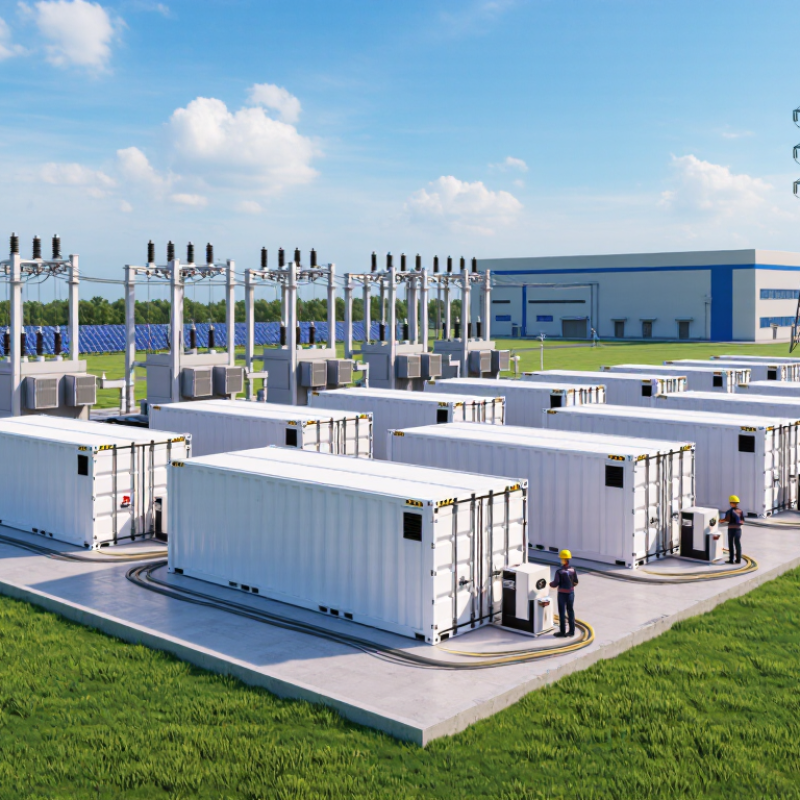
China Best Battery Energy Storage How Does It Work?

Battery Energy Storage in China: Definition and Core Components

China Best Battery Energy Storage: How Does It Work?

Battery Energy Storage in China: Definition and Core Components

Battery energy storage systems store electricity chemically and release it when demand rises. In China, this usually means lithium-ion battery units connected to power-conversion equipment. The core system includes battery cells, battery management systems, inverters, thermal controls, fire protection, and energy management software. A container may hold battery racks, sensors, cooling pipes, and safety controls. The battery management system monitors voltage, temperature, and state of charge. It can disconnect a faulty module within seconds.

China’s National Energy Administration reported 73.76 GW and 168 GWh of new energy storage capacity by the end of 2024. This capacity supports renewable integration, peak shaving, and grid frequency control. The International Energy Agency reported that global battery storage additions reached about 42 GW in 2023. China contributed a major share of this growth.

Yet capacity figures can confuse readers. Power describes delivery speed, while energy describes storage duration. A 100 MW system may discharge for one hour or four hours. The practical value changes greatly. Cooling performance, cell ageing, operating temperature, and maintenance records also affect real output. China Energy Storage Alliance reports increasingly detailed deployment data, but project definitions still vary across regions. That limitation deserves attention. A simple capacity table cannot show every field condition.

How Battery Energy Storage Systems Store and Release Electricity

Abattery energy storage system (BESS) stores electricity chemically, then returns it when demand rises. During charging, an inverter converts alternating current into direct current for the battery cells. The cells move ions between electrodes, holding energy inside chemical bonds. A battery management system watches voltage, temperature, and state of charge. It can isolate a weak module before a small problem becomes a larger one. In practice, the cabinet may hum softly while fans control heat. The process is simple. The controls are not.

When electricity is needed, the cells reverse their electrochemical reaction. Direct current flows to the inverter, which produces grid-compatible alternating current. The system then feeds a building, microgrid, or selected equipment. Timing matters. Sensors measure load changes within milliseconds, while software decides how much power to deliver. A 1-megawatt system can supply power quickly, but its duration depends on capacity. A 2-megawatt-hour battery may deliver 1 megawatt for about two hours, before conversion losses and reserve limits. Operators usually keep reserve power to protect the cells and meet safety requirements.

Storage performance depends on temperature, charging speed, cycling frequency, and installation quality. Cooling systems work harder on hot afternoons, while cold conditions can reduce available power. Round-trip efficiency is never perfect; some electricity becomes heat during conversion. Monitoring software records alarms, temperatures, and charging patterns for maintenance decisions. Yet predictions can drift when weather or building demand changes unexpectedly. That limitation deserves attention. Reliable operation requires inspections, tested protection systems, and clear emergency procedures. Good engineering is less about claiming perfection and more about measuring what the battery actually does.

Key Technologies Used in China’s Best Energy Storage Batteries

China’s best battery energy storage systems combine mature cell chemistry with careful system engineering. Many use lithium iron phosphate cells because they offer strong thermal stability, long cycle life, and lower fire risk than some alternatives. Their practical value appears in containerized projects, where batteries store solar power during the day and release it after sunset.

The battery management system monitors voltage, temperature, current, and state of charge. It balances individual cells and can disconnect a damaged section within milliseconds. Thermal management is equally important. Air cooling may suit smaller installations, while liquid cooling provides more even temperature control in dense containers. Power conversion systems then change direct current into grid-compatible alternating current. Energy management software forecasts demand, solar production, and electricity prices. It also coordinates charging and discharge schedules.

Tips: Check cycle-life data, operating temperatures, enclosure protection, and independent safety tests. Ask how the system behaves after one sensor fails. Small details matter.

In field projects, reliable communication between the BMS, converter, and control platform often determines real performance. A battery may look excellent on paper but lose efficiency through poor calibration or heat control. China’s manufacturing strength supports automated cell inspection and large-scale quality testing, although consistency still requires continuous monitoring. No system is perfect. Dust, humidity, installation errors, and aging can expose weaknesses that laboratory tests miss. Regular inspections and conservative operating limits remain necessary.

China Best Battery Energy Storage How Does It Work? - Key Technologies Used in China’s Best Energy Storage Batteries

Technology or System Dimension How It Works Typical Technical Data Why It Matters for Energy Storage in China
Battery Chemistry Lithium iron phosphate cells store electrical energy through the reversible movement of lithium ions between the cathode and anode during charging and discharging. LFP chemistry; nominal cell voltage is commonly about 3.2 V. LFP provides a strong balance of safety, cost, cycle durability, and raw-material availability for stationary storage.
Energy Conversion System A bidirectional power conversion system changes alternating current from the grid into direct current for charging and converts battery direct current back to alternating current during discharge. Typical conversion efficiency is approximately 96%–99% per direction, depending on operating conditions. It enables the battery system to charge from renewable generation or the grid and discharge electricity when it is needed.
Battery Management System The battery management system monitors voltage, current, temperature, state of charge, and state of health while balancing individual cells and controlling protection functions. Monitors at cell, module, rack, and container levels; includes overvoltage, undervoltage, overcurrent, and overtemperature protection. Accurate monitoring and balancing help improve usable capacity, operating life, and safety.
Thermal Management Air cooling or liquid cooling removes heat generated during charging and discharging and keeps cells within their permitted temperature range. Liquid-cooled systems commonly target a narrow temperature difference between cells, often around 3–5°C under controlled operation. Consistent temperature control reduces performance differences between cells and lowers thermal-stress risks.
Fire Detection and Suppression Temperature, smoke, gas, and pressure sensors detect abnormal conditions. The system can isolate affected sections and activate appropriate suppression equipment. Protection may include cell-level monitoring, rack isolation, ventilation, alarms, and container-level suppression. Multiple protection layers are essential because battery systems contain many closely packed electrochemical cells.
Energy Efficiency Round-trip efficiency measures the electricity recovered from the system compared with the electricity used to charge it, including conversion and auxiliary losses. Typical system-level round-trip efficiency is approximately 85%–95%, depending on configuration, temperature, power level, and operating strategy. Higher efficiency reduces energy losses and improves the economic value of renewable-energy shifting.
Cycle Life Cycle life is the number of charge-and-discharge cycles a battery can complete before its capacity falls to a defined level, commonly 70%–80% of the initial capacity. Many LFP stationary-storage systems are designed for roughly 4,000–10,000 equivalent full cycles under specified conditions. Long cycle life supports frequent daily operation for peak shaving, renewable integration, and grid balancing.
Response Time Power controls detect grid or load changes and adjust the battery output electronically without the mechanical delay of conventional generators. Power response can begin within milliseconds to seconds, depending on the control system and grid-service requirement. Fast response supports frequency regulation, voltage support, and short-duration grid stabilization.
State of Charge Control State of charge estimates the remaining usable energy and is calculated from current integration, voltage behavior, temperature, and operating history. Operating limits are normally set below 0% and above 100% theoretical cell capacity to preserve safety and service life. Maintaining a controlled operating window helps prevent overcharge, deep discharge, and accelerated degradation.
Containerized Design Battery racks, cooling equipment, power conversion units, fire protection, and control systems are integrated into modular enclosures. Common configurations use standardized battery racks and scalable containerized units, with capacity customized for the project. Modularity simplifies transportation, installation, maintenance, and capacity expansion for utility-scale projects.
Grid and Renewable-Energy Integration The storage system charges when electricity supply is abundant or prices are lower and discharges during periods of high demand or renewable-energy shortfall. Typical applications include renewable-energy shifting, peak shaving, frequency regulation, backup power, and grid congestion relief. Storage helps reduce renewable-energy curtailment and improves the flexibility of power systems with high solar and wind penetration.
Digital Monitoring and Control Supervisory control and data acquisition platforms collect operating data, analyze alarms, forecast available capacity, and coordinate multiple battery units. Common monitored parameters include voltage, current, temperature, power, energy, state of charge, and state of health. Digital control improves dispatch accuracy, preventive maintenance, remote operation, and system availability.
Safety and Compliance Design System design combines electrical protection, mechanical separation, thermal controls, emergency shutdown, monitoring, and installation procedures. Projects are typically designed around applicable national, local, and international electrical, fire-safety, and battery-storage requirements. Layered compliance reduces operational risk and supports reliable deployment in utility, commercial, and industrial environments.

Note: Technical values are representative ranges for modern lithium iron phosphate stationary energy-storage systems. Actual performance depends on cell design, operating temperature, depth of discharge, power rating, system configuration, and project conditions.

Safety, Efficiency, and Performance Evaluation Methods

China’s battery energy storage systems store electricity through electrochemical reactions. During charging, lithium ions move into the negative electrode. During discharge, they return and produce usable power. A container may hold battery racks, cooling equipment, inverters, and fire detection sensors. Small details matter, such as a loose connection or a blocked air channel.

Safety evaluation begins with cell quality, thermal monitoring, insulation checks, and controlled abuse testing. Operators should record temperature differences between modules, not only average readings. International safety practice also examines propagation resistance and emergency shutdown performance. The 2023 edition of NFPA 855 provides installation guidance for stationary energy storage systems. However, compliance does not remove every risk. Site design, maintenance, and human response can still fail.

Efficiency requires more than measuring inverter output. Engineers calculate round-trip efficiency, standby consumption, response time, and capacity fade over repeated cycles. Lazard’s 2024 Levelized Cost of Storage analysis places lithium-ion round-trip efficiency broadly near 86–95%, depending on system design and operating conditions. Actual results may fall lower in hot climates or partial-load operation. NREL’s 2024 Annual Technology Baseline uses about 85% for utility-scale battery round-trip efficiency. Performance tests should include a full charge, a controlled discharge, thermal logging, and capacity verification. Numbers can look excellent on paper. Field data deserves more trust.

China Battery Energy Storage: How Does It Work?

Safety, efficiency, and performance evaluation of a representative utility-scale lithium-ion battery energy storage system.

How to read the chart: The ranges show typical engineering reference values rather than data from a specific company or brand. Round-trip efficiency measures how much stored energy can be delivered back to the grid. Availability reflects the percentage of time the system is ready to operate. Capacity retention indicates the remaining usable capacity after approximately 4,000 full equivalent cycles. Actual results depend on chemistry, temperature, charge-discharge rate, control strategy, and testing standards.

Reference basis: commonly reported utility-scale lithium-ion battery storage performance ranges; values are indicative and should be verified under the applicable test protocol.

Applications and Future Development of China’s Battery Storage Systems

China’s battery energy storage systems are becoming practical tools for balancing a fast-changing power network. They store electricity when solar output is high or demand is low. Later, in the evening, inverters release controlled power to homes, factories, and charging stations. A battery rack, thermal management unit, battery management system, and power conversion equipment work together. Safety depends on sensors, fire protection, ventilation, and regular inspection.

Applications are expanding beyond large renewable projects. A coastal industrial park may use storage to reduce peak-demand charges and protect sensitive equipment from short outages. In western regions, containerized systems can support remote grids when transmission capacity is limited. Urban communities may combine batteries with rooftop solar, helping elevators, pumps, and emergency lighting operate during grid disruptions. Storage also supports frequency regulation, but performance depends on accurate forecasting and disciplined maintenance. Real sites teach an uncomfortable lesson: a large battery is not automatically a reliable battery.

Future development will likely emphasize safer chemistries, longer service life, recyclable materials, and smarter dispatch software. Artificial intelligence may predict demand, weather, and battery degradation more precisely. Still, algorithms need transparent testing and human oversight. Grid connection rules, end-of-life planning, and fire-response training must develop alongside capacity. Costs may fall, yet replacement parts and skilled technicians remain practical concerns. The sector is advancing quickly. Some assumptions will need revision.

FAQS

What is a battery energy storage system?

It stores electricity through chemical reactions and releases power when demand increases. In China, many systems use lithium-ion battery units.

What are the main components?

A typical container includes battery cells, racks, sensors, cooling pipes, inverters, and fire detection equipment. Management software coordinates charging and discharge.

How does the battery management system improve safety?

It monitors voltage, temperature, current, and charge levels. It can disconnect a faulty module within seconds. Small faults still need investigation.

Why are lithium iron phosphate cells widely used?

They offer strong thermal stability, long cycle life, and lower fire risk than some alternatives. Their performance still depends on temperature and maintenance.

How does energy storage support renewable power?

Batteries can store solar electricity during daylight and release it after sunset. They also support peak shaving and grid frequency control.

What is the difference between power capacity and energy capacity?

Power capacity shows delivery speed, measured in megawatts. Energy capacity shows storage amount, measured in megawatt-hours. A 100-megawatt system may last one hour or four.

How should system efficiency be evaluated?

Review round-trip efficiency, standby consumption, response time, and capacity loss. Testing should include full charging, controlled discharge, thermal logging, and capacity verification.

What safety details deserve close attention?

Check module temperature differences, insulation, emergency shutdowns, blocked air channels, and loose connections. Compliance reduces risk, but it cannot remove every failure.

What should buyers inspect before selecting a system?

Request cycle-life data, operating-temperature ranges, enclosure protection, and independent safety test results. Ask how the system responds when one sensor fails.

What limits real-world performance?

Heat, dust, humidity, installation errors, aging, and poor calibration can reduce output. Laboratory results may look better. Field conditions matter.

Conclusion

China’s battery energy storage systems are designed to capture electricity when supply is available and deliver it when demand increases. The main components include battery cells, modules, a battery management system, power conversion equipment, thermal management units, and control software. Understanding how does battery energy storage work begins with the charging process: electrical energy is converted into chemical energy and stored inside the cells. During discharge, the stored energy is converted back into usable electricity for homes, businesses, industrial facilities, or power grids.

China’s advanced energy storage batteries increasingly rely on improved cell chemistry, intelligent monitoring, modular designs, and digital control technologies. Their performance is evaluated through safety, energy efficiency, response speed, cycle life, operating temperature, and system stability. These systems support renewable energy integration, peak-load management, backup power, and grid balancing. With continued development, China’s battery storage sector is expected to become safer, more efficient, and more adaptable, helping build a flexible and reliable low-carbon energy system.

Sophia

Sophia

Sophia is a dedicated marketing professional with an exceptional depth of knowledge about her company's products and services. With a keen understanding of market trends and customer needs, she crafts insightful blog posts that not only inform but also engage readers, enriching the company’s online......