Choosing a battery energy storage system begins with a practical question: what is a battery energy storage system, and what problem must it solve? In simple terms, it stores electricity in batteries and releases that power when needed. The system usually includes battery modules, inverters, thermal controls, monitoring software, and safety equipment. Each part affects performance, cost, and reliability.
Dr. Imre Gyuk, director of the U.S. Department of Energy’s Energy Storage Research program, has described energy storage as “a key technology for the future of the electric grid.” That perspective matters because storage is not only a battery purchase. It is an operating asset. A rural facility may need backup power during outages. A solar project may need evening discharge. A commercial building may need peak-demand control.
The right choice depends on measurable details. Check usable capacity, power rating, round-trip efficiency, cycle life, warranty terms, response time, and site conditions. A 1 MWh system cannot deliver every watt for one hour without operating limits. Heat, dust, poor ventilation, and frequent cycling can reduce its real performance.
There is no universal best system. That is easy to forget. A cheaper battery may create higher replacement costs later. A larger system may also remain underused. Careful load data, realistic operating assumptions, and independent technical review make the decision more reliable. This guide explains how to compare technologies, suppliers, safety features, and lifetime value before signing a purchase agreement.
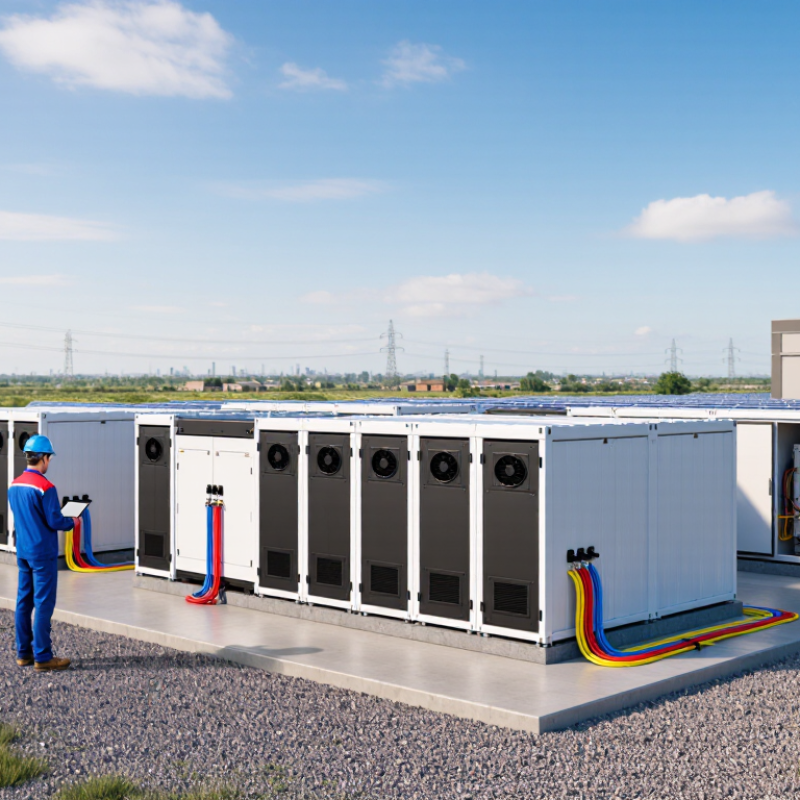
Understanding battery energy storage system basics starts with the difference between power and energy. Power, measured in kilowatts, shows how much electricity the system can deliver at once. Energy, measured in kilowatt-hours, indicates how long it can operate. A system rated at 100 kW and 200 kWh may supply 100 kW for roughly two hours under ideal conditions.
Battery chemistry affects safety, lifespan, temperature tolerance, and maintenance. The battery management system monitors voltage, temperature, and cell balance. Thermal controls matter in hot or poorly ventilated rooms. During site assessments, engineers should also check electrical loads, available space, fire protection, and grid connection requirements. A neat spreadsheet can still mislead if real operating conditions are ignored.
Tips: Compare usable capacity, not only the advertised capacity. Ask how capacity changes after several years of cycling. Check round-trip efficiency, response time, warranty limits, and monitoring access. Review independent safety testing and installer qualifications. Leave room for expansion, but avoid oversizing without a clear load profile. Simple is safer. One practical concern is often missed: standby losses can reduce savings when demand is low. The best choice may not be the largest system. It should match daily usage, backup expectations, climate, and future electricity needs. Certain assumptions may need review after several months of actual data.
A suitable battery energy storage system begins with a clear operating goal. Are you reducing peak demand, storing solar power, or protecting critical loads? Each goal changes the required battery size, inverter capacity, and control strategy. Review at least twelve months of electricity bills and interval data. Then map the site’s hourly load profile. A brief outage may require only short backup support. A remote facility may need several hours of energy. Start there.
Site conditions matter as much as energy targets. Measure the available footprint, floor loading, ventilation, drainage, and access for maintenance equipment. Check ambient temperatures across the year, including heat near rooftops or paved areas. Confirm electrical interconnection limits and the location of essential circuits. In practice, projects can look adequate on paper but fail when cable routes, fire separation, or expansion space are ignored. Leave room for inspection. Plan for imperfect data.
Tips: Define the critical loads before selecting capacity. Separate power needs from energy needs. Power supports a high load at one moment; energy determines how long support lasts. Request independent performance data, warranty conditions, degradation assumptions, and service response times. Ask how the system behaves during communications loss. A test under realistic load is more useful than a polished brochure. Review noise, monitoring access, emergency procedures, and future expansion before approving the site design.
Choosing a battery energy storage system starts with chemistry, not a brochure headline. Lithium iron phosphate offers strong thermal stability and long cycle life. Nickel-manganese-cobalt chemistry usually provides higher energy density. That advantage matters where floor space is limited. It may matter less beside a wind farm. The International Energy Agency reported nearly 42 GW of battery storage additions in 2023, bringing global capacity close to 85 GW. This growth also exposes a common mistake: treating every lithium system as interchangeable.
Capacity describes stored energy, measured in kWh or MWh.
Power describes delivery speed, measured in kW or MW.
A 10 MWh system rated at 5 MW can discharge for roughly two hours. A 10 MWh system rated at 10 MW lasts about one hour. The application decides the balance. Frequency control needs rapid power. Solar shifting needs longer duration. Size for the worst useful hour, not the average day. That sounds obvious. It is often missed.
Check round-trip efficiency, degradation, operating temperature, and usable state-of-charge limits. The U.S. Department of Energy’s 2024 cost and performance assessment places lithium-ion round-trip efficiency commonly around 85–95%, depending on system boundaries. NREL’s 2024 Annual Technology Baseline also models storage costs across duration and technology assumptions, rather than using one universal price. In practice, I would request measured cycle data, warranty conditions, and auxiliary-load figures. Published ratings can look precise. Real projects are less tidy. Planning with a modest reserve may cost more initially, but ignoring aging can create an expensive capacity gap later.
How to Choose a Battery Energy Storage System
Choosing a battery energy storage system requires more than comparing capacity and purchase price. Safety should guide every technical decision. Look for thermal sensors, fire detection, electrical isolation, and a robust enclosure. Ask for independent test reports and clear installation procedures. A qualified installer should assess ventilation, cable routing, emergency access, and local electrical requirements. Small details matter, especially in a crowded utility room.
Efficiency affects daily operating costs. Compare round-trip efficiency under realistic temperatures and partial-load conditions. A laboratory figure may not match winter performance. Check the system’s depth-of-discharge limits and charging response during peak demand. Higher efficiency is valuable, but only when the battery supports your actual load profile. Poor data can make a good system look suitable.
Lifespan depends on cycling, heat, and charging habits. Review expected cycle life at the stated depth of discharge, not an ideal setting. Maintenance should include firmware checks, connection inspections, temperature reviews, and readable event logs. Remote alerts can shorten response time, but they cannot replace physical inspections. Keep records.
In practice, projections are imperfect. Weather changes. Loads grow. A cautious evaluation leaves room for these uncertainties and tests the system after installation. Performance should be measured, not simply assumed.
| Evaluation Dimension | Lithium Iron Phosphate (LFP) | Lithium Nickel Manganese Cobalt Oxide (NMC) | Valve-Regulated Lead-Acid (VRLA) | Vanadium Redox Flow Battery (VRFB) |
|---|---|---|---|---|
| Typical system application | Commercial, industrial, residential, and utility-scale storage | Space-constrained systems and applications requiring high energy density | Backup power and shorter-duration stationary storage | Long-duration commercial and utility-scale storage |
| Electrochemical safety profile | High relative safety Strong thermal stability and lower oxygen-release tendency than many nickel-rich lithium-ion chemistries |
Moderate Higher energy density but generally greater thermal-runaway sensitivity than LFP |
Moderate Low thermal-runaway risk, but hydrogen generation, acid leakage, and ventilation requirements must be managed |
High relative safety Aqueous, non-flammable electrolyte; pumps, piping, and electrolyte containment still require protection |
| Typical round-trip efficiency | Approximately 88%–95% | Approximately 90%–95% | Approximately 70%–85% | Approximately 65%–85% |
| Typical usable depth of discharge | Approximately 80%–95%, subject to the manufacturer’s operating limits | Approximately 80%–95%, subject to the manufacturer’s operating limits | Approximately 50%–80%; frequent deep discharge significantly reduces service life | Approximately 75%–100%; capacity is generally independent of power rating |
| Typical cycle life | Approximately 3,000–8,000 cycles | Approximately 1,500–4,000 cycles | Approximately 500–2,000 cycles, depending strongly on discharge depth and temperature | Approximately 10,000–20,000+ cycles |
| Calendar-life expectation | About 10–15 years with appropriate thermal management and operating controls | About 8–15 years, depending on temperature, state of charge, and cycling intensity | About 3–8 years in typical cycling service; standby applications may differ | Often 15–25 years; pumps and other balance-of-plant components may require earlier service |
| Energy density | Approximately 90–160 Wh/kg at cell level | Approximately 150–250 Wh/kg at cell level | Approximately 30–50 Wh/kg | Approximately 15–35 Wh/kg at system level |
| Response time | Milliseconds to seconds | Milliseconds to seconds | Milliseconds to seconds | Seconds; power electronics determine final response performance |
| Temperature sensitivity | Requires thermal management; charging below 0°C generally requires heating or restricted operation | Requires thermal management; high temperature accelerates degradation | Performance and life decline significantly at high or low temperatures | Electrolyte temperature affects viscosity and performance; heating may be needed in cold climates |
| Routine maintenance needs | Low Battery-management-system monitoring, HVAC inspection, fire-safety checks, and electrical inspections |
Low Battery-management-system monitoring, HVAC inspection, fire-safety checks, and electrical inspections |
Medium Terminal and connection inspections, ventilation checks, temperature monitoring, and periodic capacity testing |
Medium Pump, valve, pipe, filter, electrolyte, leak-detection, and power-conversion-system inspections |
| Fire-protection considerations | Use cell-level monitoring, thermal propagation controls, gas detection, ventilation, separation distances, and a code-compliant suppression strategy | Requires robust thermal-runaway detection, propagation barriers, ventilation, separation distances, and a code-compliant suppression strategy | Requires ventilation, hydrogen detection where applicable, electrical protection, and acid-spill controls | Electrolyte is generally non-flammable, but electrical equipment, pumps, cables, and containment systems still require protection |
| Best fit by discharge duration | Approximately 1–4 hours for many applications | Approximately 1–4 hours for many applications | Typically minutes to several hours, depending on the required power and life target | Approximately 4–12+ hours, with longer durations possible by increasing electrolyte volume |
| Key selection advantage | Strong balance of safety, efficiency, cycle life, and cost for daily cycling | High energy density and compact footprint | Established technology and relatively simple procurement for backup applications | Very long cycle life, high depth of discharge, and independent sizing of power and energy |
| Primary trade-off | Lower energy density than NMC and the need for engineered thermal and fire protection | Greater thermal-management and safety complexity, with potential degradation under severe operating conditions | Lower efficiency, shorter cycle life, heavier equipment, and greater sensitivity to deep cycling | Lower energy density, larger footprint, higher system complexity, and auxiliary power consumption |
| Recommended due-diligence checks | Review UL 9540/9540A or equivalent evidence, BMS functions, degradation warranty, thermal design, and site fire-code compliance | Review thermal-propagation testing, BMS functions, degradation warranty, thermal design, and site fire-code compliance | Review ventilation design, capacity-test procedures, temperature limits, replacement plan, and recycling arrangements | Review electrolyte containment, pump redundancy, leak detection, auxiliary-load assumptions, and long-term service capability |
Note: Efficiency, cycle life, and service-life figures are representative industry ranges rather than guarantees. Compare systems using the same conditions, including ambient temperature, rated power, usable energy, depth of discharge, charge/discharge rate, standby consumption, and end-of-life capacity threshold.
Choosing an installer deserves more attention than comparing battery prices. I learned this after reviewing a system where cable routes were poorly planned. The equipment worked, but maintenance access became awkward. That matters later. Ask for proof of electrical qualifications, storage experience, insurance, and local permits. Request two recent project references. A credible installer should explain fire separation, ventilation, emergency shutdowns, and grid requirements in plain English. Avoid anyone promising guaranteed savings without studying your tariff and household load.
Build the budget around the complete installation, not the battery cabinet alone. Include design fees, switchgear, structural work, inspections, commissioning, monitoring, and possible service-call charges. Ask for an itemized quote with assumptions clearly marked. A useful comparison includes usable capacity, expected cycles, efficiency, degradation, and replacement terms. My early estimate missed panel upgrades. That was an expensive oversight. Leave room for a 10 to 15 percent contingency because older wiring can reveal surprises.
Long-term support should be written into the agreement. Confirm response times, remote diagnostics, software access, spare-parts availability, and annual inspection options. Check who handles warranty claims if the installer closes or changes ownership. Ask for a commissioning report containing test results and shutdown instructions. Keep that file with your electrical records. Support plans are not equally valuable. A cheap plan may exclude travel, labor, or battery health testing. Reconsider the proposal if answers remain vague.
Power measures immediate output in kilowatts. Energy measures stored electricity in kilowatt-hours. A 100 kW, 200 kWh system may run for about two hours under ideal conditions.
Compare usable capacity, not only the advertised figure. Check expected capacity after several years of cycling. Actual results may differ.
Look for thermal sensors, fire detection, electrical isolation, and a strong enclosure. The site should also provide ventilation, emergency access, and clear shutdown procedures. Small details matter.
Heat can shorten battery life and increase maintenance needs. Efficiency may also fall during cold weather. Review performance at realistic temperatures, not only laboratory conditions.
The installer should assess electrical loads, cable routes, available space, ventilation, fire protection, and grid requirements. They should also verify local permits and emergency access.
Include design fees, switchgear, structural work, inspections, commissioning, monitoring, and service calls. Older wiring may require upgrades. Leave a 10 to 15 percent contingency.
Maintenance can include firmware checks, connection inspections, temperature reviews, and event-log checks. Remote alerts help, but they cannot replace physical inspections. Keep records.
Confirm response times, remote diagnostics, software access, spare-parts availability, and inspection options. Ask who handles warranty claims if the installer changes ownership. Vague answers deserve another review.
Choosing the right battery energy storage system begins with understanding what is a battery energy storage system: a technology that stores electrical energy for later use, helping balance supply, demand, and backup needs. Start by defining your goals, such as reducing peak energy costs, increasing renewable energy use, improving resilience, or supporting off-grid operation. Then assess site conditions, available space, energy demand, installation environment, and connection requirements.
Compare battery chemistries according to safety, usable capacity, power output, efficiency, expected lifespan, and maintenance needs. Capacity determines how long the system can provide energy, while power rating affects how much electricity it can deliver at one time. Consider operating temperatures, monitoring features, warranty coverage, and future expansion. Finally, choose a qualified installer, create a realistic budget that includes installation and ongoing service, and confirm the availability of long-term technical support. A careful evaluation will help ensure the system is safe, reliable, cost-effective, and suited to both current and future energy needs.
